DEPARTMENT OF NEUROSURGERY
INTRODUCTION
Our department covers the entire spectrum of neurosurgical interventions. We treat patients with severe skull, brain and spinal injuries, degenerative spinal disorders, brain tumours, spinal tumours, degenerative spinal deformities, disorders in cerebrospinal fluid circulation and functional neurosurgery. We have extensive experience in neurointerventional treatments of hemorrhagic brain pathologies, the endovascular and open surgical interventions in vascular disorders of the brain and spinal cord. Within neuro-oncology, our clinic contributes to the multidisciplinary care of brain and spine tumours.
The annual number of open surgeries at the department is close to 2,000. The number of endovascular interventions, including the mechanical thrombectomies, exceeds 500 every year. Our department has 4 surgical sites. This entails a hybrid and an endovascular operating theatre, 3 specialist outpatient sites, 45 general beds and 11 neurointensive beds. We have a 25-bed rehabilitation unit, which helps patients to recover from severe craniocerebral injuries (neurotrauma, hemorrhagic and ischemic stroke).
Our particular area of preference is neurointensive care. These include intervention, open surgery, neuromonitoring, neurointensive care, neurotraumatology, multimodal neuromonitoring, invasive brain pressure and autoregulation, brain temperature and oxygenation measurement, experimental implant trials in spinal surgery and resolution of cerebrovascular disorders.
A multidisciplinary skull base surgery team collaborate with the Endochronology Unit of the Department of Internal Medicine 1, the Department of Ophthalmology and the Endoscopy Unit of the Department of ENT, Head and Neck Surgery.
Our Head and Neck Surgery Unit works with the staff of the Department of Onco-Dermatology and the Department of ENT, Head and Neck Surgery. Our department treats patients from three counties (Baranya, Somogy and Tolna) of Hungary. However, it also takes patients on regional level from other counties (Zala, Bács-Kiskun, Veszprém and Vas) in the fields of functional neurosurgery, neuro-oncology, vascular pathologies and neurotraumatology.
Number of clinical trial investigators with a Good Clinical Practice (GCP) certificate : 2
Number of clinical trial doctors with Good Clinical Practice (GCP) certificate: 8
Number of specialist doctors with Clinical Pharmacology certificate: 0
EQUIPMENTS CLINICAL TRIALS
- Rrefrigerator - 80 °C
- Transcranial Doppler ultrasound device
- Blood gas analyzer
- Centrifuge
- Continuous Non-invasive Arterial Pressure (CNAP) measuring device
REFERENCE CLINICAL TRIALS
| Protocol Identifier | Name of Study | Principal Investigator |
1 | NCT02210221 | Collaborative European Neuro Trauma Effectiveness Research in TBI (CENTER-TBI) | Prof. Dr. András Büki |
2 | ATO-02 | Biomarker Assessment For Neurotrauma Diagnosis and Improved Triage System (BANDITS) | Prof. Dr. András Büki |
3 | MRC G0501444/NUTH 3545 | Surgical Trial in Lobar Intracerebral Haemorrhage (STICH II) | Prof. Dr. András Büki |
4 | BHR-100-301 | A Randomized, Double-Blind, Placebo-Controlled Phase 3 Study to Investigate the Efficacy and Safety of Progesterone in Patients With Severe Traumatic Brain Injury (SyNAPSe) | Prof. Dr. András Büki |
5 | ATO-04 | Biomarkers of Mild and Moderate Traumatic Brain Injury | Prof. Dr. András Büki |
6 | ATO-06 | A Prospective Clinical Evaluation of Biomarkers of Traumatic Brain Injury (ALERT-TBI) | Prof. Dr. András Büki |
7 | ICH02 NCT01827046 | Minimally Invasive Surgery Plus Rt-PA for ICH Evacuation Phase III (MISTIE III) | Prof. Dr. András Büki |
8 | ATO-12 | A Prospective Evaluation of UCH-L1 and GFAP Biomarker Kinetics After Mild Brain Injury Trauma (VIGILANT) | Prof. Dr. András Büki |
9 | GDX-44-004 | P03277 Dose Finding Study in Central Nervous System (CNS) Magnetic Resonance Imaging (MRI) | Prof. Dr. András Büki |
OUR PUBLICATIONS
Synnot, A, RL Gruen, D Menon, EW Steyerberg, A Buki, W Peul, JH Elliott, and A Maas. 2019. “A New Approach to Evidence Synthesis in Traumatic Brain Injury.” JOURNAL OF NEUROTRAUMA. doi:10.1089/neu.2015.4124.
Maegele, M, H Schochl, T Menovsky, H Marechal, N Marklund, A Buki, and S Stanworth. 2017. “Coagulopathy and Haemorrhagic Progression in Traumatic Brain Injury: Advances in Mechanisms, Diagnosis, and Management.” LANCET NEUROLOGY 16 (8): 630–647. doi:10.1016/S1474-4422(17)30197-7.
Welch RD, Ayaz SI, Lewis LM, Unden J, Chen JY, Mika VH, Saville B, Tyndall JA, Nash M, Buki A, Barzo P, Hack D, Tortella FC, Schmid K, Hayes RL, Vossough A, Sweriduk ST, Bazarian JJ. Ability of Serum Glial Fibrillary Acidic Protein, Ubiquitin C-Terminal Hydrolase-L1, and S100B To Differentiate Normal and Abnormal Head Computed Tomography Findings in Patients with Suspected Mild or Moderate Traumatic Brain Injury. J Neurotrauma. 2016 Jan 15;33(2):203-14. doi: 10.1089/neu.2015.4149. Epub 2015 Dec 18
PRINCIPAL INVESTIGATORS
Prof. Dr. András Büki
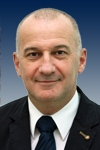
| SCIENTIFIC DEGREE | PhD, DSc |
| POSITION | University Professor |
| QUALIFICATIONS | neurosurgery, clinical oncology |
| SCIENTIFIC INTEREST | traumatic brain injury, diffuse axonal damage |
| REFERENCE CLINICAL TRIALS | ATO-02: Biomarker Assessment For Neurotrauma Diagnosis and Improved Triage System (BANDITS). ATO-04: Biomarkers of Mild and Moderate Traumatic Brain Injury Observational study. ATO-06: A Prospective Clinical Evaluation of Biomarkers of Traumatic Brain Injury (ALERT-TBI) Observational study. NCT02210221: Collaborative European Neuro Trauma Effectiveness Research in TBI (CENTER-TBI) Observational study.
|
| AVAILABLE FOR PERFORMING CLINICAL TRIALS | Phase 1-4 |
STUDY TEAM
We carry out clinical trials by using the Coordination Centre for Clinical Trials (KVKK).
Created: 20.11.2019.
Last modified: 20.11.2019.